Evaluating the "True Cost" of Ballast
Tractor owners, equipment dealers, and off-the-road (OTR) tire professionals evaluate four primary options: Chlorides, Methanol-based mixtures, Antifreeze, and Rim Guard (Beet Juice). While up front cost is a factor, the "true cost" must include machine stability, technician safety, and long-term liability.
Methanol-based mixtures are fundamentally inefficient as a weight source. Because they typically contain 30–60% alcohol to prevent freezing, they result in a finished weight of only 7.6 lbs/gal, significantly lighter than even plain water (8.3 lbs/gal). In contrast, Rim Guard provides a certified 10.7 lbs/gal, delivering 30% more stabilizing weight per gallon installed. Most importantly, Rim Guard is a non-toxic agricultural byproduct that can be installed tubeless without the corrosion, flammability, or environmental risks associated with methanol-based fluids.
Ballast Comparison: Performance, Safety, and Liability
| Metric |
Rim Guard® Beet Juice Tire Ballast |
Methanol-based Mixture |
| Weight |
10.7 lbs/gal
Max Traction |
7.6 lbs/gal
Lighter than Water |
| Corrosion |
Naturally noncorrosive. No tubes required. |
Solvent-based. Corrosive to rubber and rims over time. Requires inner tubes. |
| Handling & Safety |
Non-Toxic. Animal Food-Grade safe. No PPE required. |
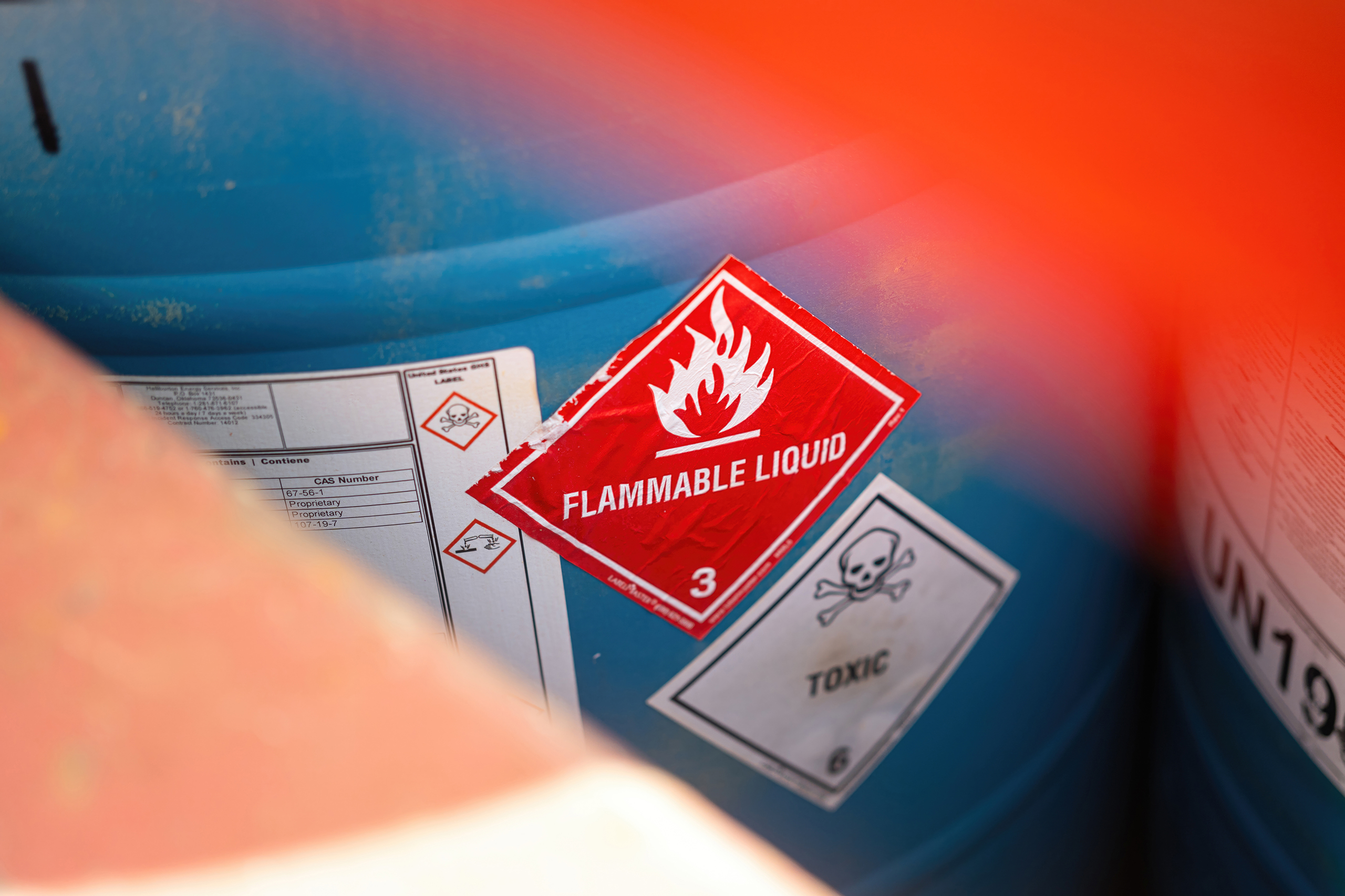
Toxic. GHS Category 3. Dangerous via inhalation or skin absorption. |
| Fire & Explosion Risk |
Non-Flammable. Zero flashpoint risk. |
Highly Flammable. Flashpoint 75°F (24°C). Risk of Diffusion Explosions. |
| Regulatory Standards |
Meets all agricultural safety guidelines. |
Prohibited by USTMA TISB 41 for installation in tires. |
| Storage Compliance |
Standard storage. No special fire-rated facilities needed. |
Requires OSHA 1910.106 or NFC Canada fire-rated storage for >60 gallons. |
| Environmental Impact |
Biodegradable. Safe for pets, livestock and crops. |
Hazardous Spill. Requires mandatory reporting and professional remediation. |
Is Your Tire Ballast an Explosive Risk?
In the tire industry, a standard off-the-road (OTR) tire is dangerous to handle due to its massive stored energy. At the annual OTR Conference, the Tire Industry Association (TIA) classified tire inflation and service as the industry's most dangerous daily task due to the immense stored energy within the tire. A structural failure or "burst" can release enough energy to be lethal.
However, when these tires are filled with a methanol-based ballast, it creates a compounded risk. You aren't just managing air pressure anymore, you are working on a pressurized fuel tank.
- The USTMA Prohibition: In their Tire Information Service Bulletin (TISB) 41, the United States Tire Manufacturers Association (USTMA) strictly forbids any flammable substance in a tire. This is an industry-wide safety mandate.
- The OTR Global Case Study: Technical reports highlight the mechanism of "Diffusion Explosions." Friction or static electricity during service can ignite alcohol-vapor-air mixtures, generating shockwaves exceeding 1,000 psi, ten times the force of a standard tire burst.
- The Invisible Flame: High-concentration methanol burns with a flame nearly invisible in sunlight. A technician may be standing in a life-threatening fire zone without realization until an explosion occurs.
Commercial Liability: Mandatory Compliance and Insurance Risk
Storing and handling flammable tire ballast alters a dealership's insurance and regulatory profile. In both the U.S. and Canada, bulk methanol triggers specific federal mandates and significant infrastructure costs.
United States: Occupational Safety and Health Administration (OSHA) Compliance & Investment Barrier.
- OSHA 1910.106 Storage Mandates: Storing 275-gallon totes of methanol (Category 3 Flammable) is not permitted in standard shop areas. Quantities exceeding 60 gallons require a dedicated Inside Storage Room with a 1 to 2-hour Fire Resistance Rating (FRR), 4-inch liquid-tight sills, and mechanical ventilation.
- Infrastructure Costs: A U.S. dealer must typically invest in prefabricated 2-hour fire-rated storage buildings, ranging from $14,500 to $32,000 USD.
- Fines: Failure to comply can result in serious OSHA violations with penalties exceeding $16,550 per occurrence.
Canada: National Fire Code (NFC) & Workplace Hazardous Materials Information System (WHMIS) Requirements
- Storage Requirements (NFC 4.2.3 & 4.2.7): Storing a single 950L tote exceeds the 500L indoor limit, requiring a 1-to-2-hour fire-rated room. Standard plastic IBCs are generally prohibited for indoor Class IC storage. Dealers must use ULC-listed metal totes. Areas must feature explosion-proof ventilation and 110% secondary containment.
- Infrastructure Costs (CAD): Prefabricated 2-hour fire-rated lockers for a single tote range from $14,445 to $18,480 CAD, while multi-tote buildings can exceed $47,000 CAD.
- Fines & Legal Penalties: In Canada, fine amounts for fire safety violations re established through provincial legislation. Corporations found in violation of the Fire Code can face fines up to $500,000 for a first offense. Fire Marshals also hold the authority to issue immediate "Stop-Use Orders," halting all facility operations.
Risk Assessment: The "Material Change in Risk" Clause
Most commercial insurance policies include a "Material Change in Risk" provision. Storing bulk flammable ballast without upgrading your facility to NFC or OSHA standards constitutes a significant alteration of the insured premises. This creates two primary financial vulnerabilities:
- Claim Denials: Insurers may void coverage if they determine a loss was exacerbated by a non-compliant hazard. Under many policies, a failure to disclose a material change in risk allows the carrier to deny the claim entirely.
- Policy Non-Renewal: Discovering non-compliant storage during an audit often leads to immediate policy non-renewal, which could leave a dealership effectively uninsurable in the standard insurance market.
Environmental Liability: The Tire Puncture
Tractor tires can hold between 10 and 300 gallons of fluid. When a tire filled with a methanol mixture punctures on your land, it is legally classified as a Hazardous Substance Release, triggering federal and state oversight.
- Mandatory Reporting (The 15-Minute Rule): In many jurisdictions, any hazardous spill threatening a water system must be reported within 15 minutes of discovery to the State Warning Center and National Response Center (NRC). Failing to report can lead to EPA civil penalties exceeding $60,000 per day.
- Strict Liability for Landowners: As noted in the Loeb & Loeb Legal Insight, the federal Superfund law (CERCLA) imposes "strict liability" on landowners. You are responsible for the total cost of cleanup, even if the puncture was an accident.
- Professional Remediation Costs: Methanol travels rapidly through soil. Authorities often mandate "dig and haul" excavation and groundwater monitoring wells. Cleanup for even a small 30-gallon spill can easily reach $20,000 to $50,000+.
- Livestock and Soil Health: Methanol is Toxic if Swallowed (H301), posing a lethal threat to livestock. In contrast, Rim Guard is a non-toxic agricultural byproduct that is Animal Food Grade Safe. If it spills, it is a localized cleanup event, not a reportable federal emergency.
Frequently Asked Questions (FAQ)
Why does the USTMA prohibit methanol-based tire ballast?
The United States Tire Manufacturers Association (TISB 41) forbids flammable liquids because they turn a high-pressure tire into a chemical hazard. Inside a pressurized tire, methanol vapors can ignite from a simple static spark or a technician’s work light, causing a "Diffusion Explosion." These explosions generate shockwaves exceeding 1,000 psi, ten times the force of a standard tire burst which can easily bypass standard safety cages.
Can I store 275-gallon totes of methanol ballast in my shop?
Not without specialized infrastructure. Under OSHA 1910.106, methanol-based ballasts are Category 3 flammable liquids. Storing quantities over 60 gallons (like a standard tote) requires a dedicated Inside Storage Room with a 1–2 hour fire rating, mechanical ventilation, and 4-inch liquid-tight sills. Rim Guard is non-flammable and has no special storage mandates, saving dealers thousands in facility construction costs.
Will using flammable ballast increase my commercial insurance premiums?
Yes. Major carriers have increased scrutiny on flammable liquids in agricultural settings. Storing and handling flammable ballast shifts your business into a higher risk category, which can lead to significant premium hikes. Furthermore, if a fire or spill occurs and your facility is not OSHA 1910.106 compliant, your carrier may deny the claim entirely, leaving you to cover the total loss.
How much more weight does Rim Guard provide compared to alcohol mixtures?
Methanol-based mixtures are inefficient weight sources; because they require high alcohol concentrations to prevent freezing, they weigh only 7.6 to 8.1 lbs/gal, actually lighter than water. Rim Guard Beet Juice provides a certified 10.7 lbs/gal. On a standard tractor tire, switching to Rim Guard adds approximately 3 lbs of extra pulling power for every gallon added, significantly improving machine stability.
What is the "75°F Danger Zone" for tire ballast?
The flashpoint for many methanol-based ballasts is approximately 75°F (24°C). On a warm day or in a heated shop, the fluid inside the tire is already "primed" to emit ignitable vapors. At this temperature, a simple spark from a dropped steel wrench, a non-explosion-proof work light, or even static electricity can ignite the invisible cloud of vapors, potentially leading to a catastrophic fire.
Does a dealership face liability for servicing or selling a tractor with flammable ballast?
Yes. Dealers have a professional "Duty of Care" to follow industry safety standards. Selling equipment that violates USTMA TISB 41 creates significant negligence exposure.
Why does the USTMA prohibit methanol-based tire ballast?
The United States Tire Manufacturers Association (TISB 41) forbids flammable liquids because they turn a high-pressure tire into a chemical hazard. Inside a pressurized tire, methanol vapors can ignite from a simple static spark or a technician’s work light, causing a "Diffusion Explosion." These explosions generate shockwaves exceeding 1,000 psi, ten times the force of a standard tire burst which can easily bypass standard safety cages.
Can I store 275-gallon totes of methanol ballast in my shop?
Not without specialized infrastructure. Under OSHA 1910.106, methanol-based ballasts are Category 3 flammable liquids. Storing quantities over 60 gallons (like a standard tote) requires a dedicated Inside Storage Room with a 1–2 hour fire rating, mechanical ventilation, and 4-inch liquid-tight sills. Rim Guard is non-flammable and has no special storage mandates, saving dealers thousands in facility construction costs.
Will using flammable ballast increase my commercial insurance premiums?
Yes. Major carriers, such as Chubb, have increased scrutiny on flammable liquids in agricultural settings. Storing and handling flammable ballast shifts your business into a higher risk category, which can lead to significant premium hikes. Furthermore, if a fire or spill occurs and your facility is not OSHA 1910.106 compliant, your carrier may deny the claim entirely, leaving you to cover the total loss.
How much more weight does Rim Guard provide compared to alcohol mixtures?
Methanol-based mixtures are inefficient weight sources; because they require high alcohol concentrations to prevent freezing, they weigh only 7.6 to 8.1 lbs/gal, actually lighter than water. Rim Guard Beet Juice provides a certified 10.7 lbs/gal. On a standard tractor tire, switching to Rim Guard adds approximately 3 lbs of extra pulling power for every gallon added, significantly improving machine stability.
What is the "75°F Danger Zone" for tire ballast?
The flashpoint for many methanol-based ballasts is approximately 75°F (24°C). On a warm day or in a heated shop, the fluid inside the tire is already "primed" to emit ignitable vapors. At this temperature, a simple spark from a dropped steel wrench, a non-explosion-proof work light, or even static electricity can ignite the invisible cloud of vapors, potentially leading to a catastrophic fire.
Does a dealership face liability for servicing or selling a tractor with flammable ballast?
Yes. Dealers have a professional "Duty of Care" to follow industry safety standards. Selling equipment that violates USTMA TISB 41 creates significant negligence exposure.
Avoid the compliance burden and the explosive risk. Find your nearest Rim Guard dealer at Rim Guard Solutions.

.png)
.png)